
What we do
Brokerage, certification, advisory, and decarbonisation that pays for itself
Most of the carbon market separates the people who measure, the people who verify and the people who sell. On our own projects we do all three. Those credits are therefore labelled as ours, quoted on a separate line from the third-party verified units we broker, and never presented as independently verified.
01 / Brokerage
Buying and selling verified credits
For buyers carrying compliance obligations, net-zero targets or residual emissions, we source credits from regulated programmes and established registries: Australian ACCUs issued by the Clean Energy Regulator, UK Woodland Carbon Code units, and credits verified by Verra, Gold Standard, ACR and CAR. Separately, we can supply abatement certified under our own methodology from our own pipeline, and we tell you which of the two kinds you are looking at before you ask. You tell us the volume, vintage, geography and price band; we bring back options with the documentation attached, not promised afterwards.
For sellers, meaning project developers and organisations already holding certified credits, we find buyers and handle the transaction, including transfer of the certificate of ownership. Our fee structure is agreed up front, in writing.
What we won't do: we don't broker credits we can't trace to a registry entry, a certificate or a regulator. If the paperwork isn't there, neither are we. That rule has cost us transactions. It's also why buyers come back.
02 / Certification
Origination under a published methodology
Our group’s delivery and certification arm quantifies abatement under our own published, version-controlled quantification protocol, covering Scopes 1, 2 and 3 across waste, water, gas, electricity, fuel and telecommunications, built from raw usage data and invoice records. It is our methodology, not a third-party standard, and we say so plainly.
Where the line sits. Most of what we broker is verified by someone other than us: a regulator or an independent registry writes the rules and issues the unit. What we originate is different. We measure it and we certify it, and you are told that before you buy it. The two are never blended in a quote, and a buyer who wants only the independently verified kind can have exactly that. Partner details are available on request.
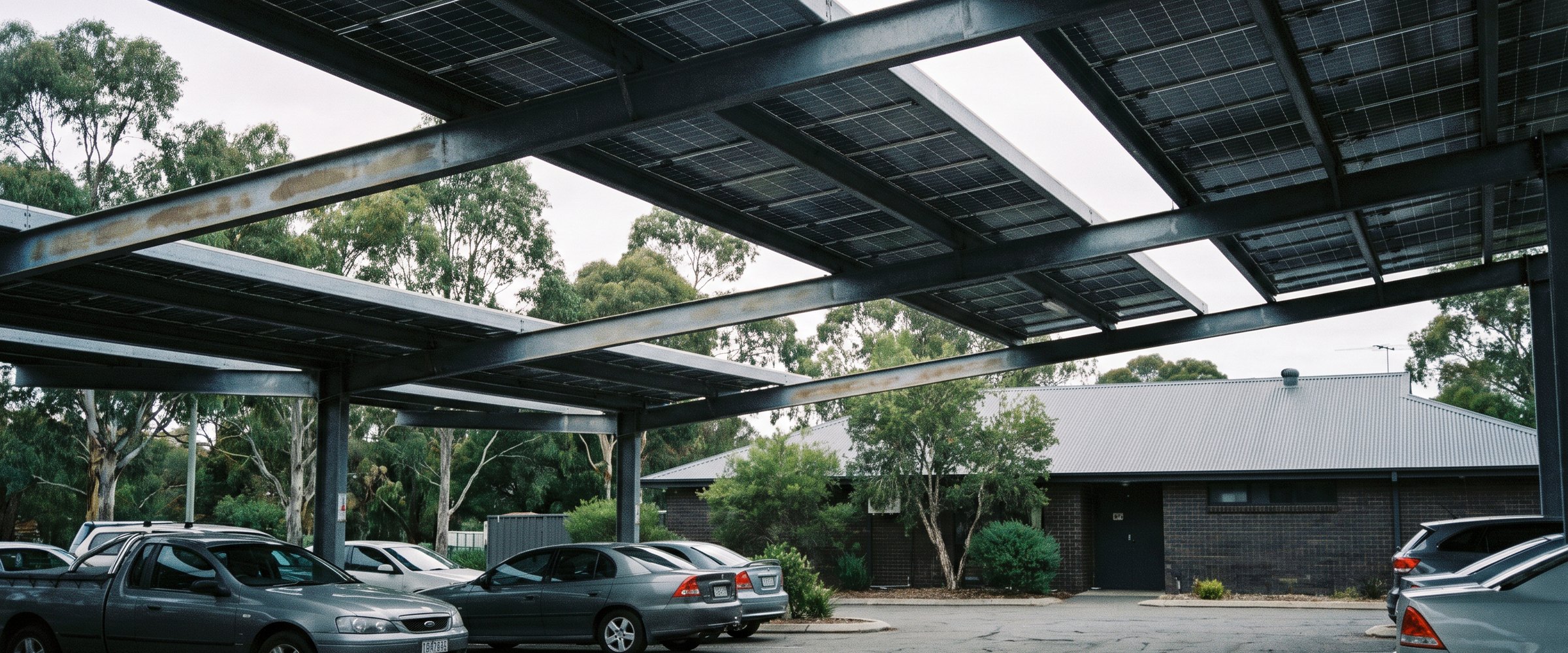
Each measured tonne of CO₂e becomes a Carbon Credits Certificate of ownership: a transferable instrument recording the project, the period and the quantification behind it. Credits are freely transferable and are retired from circulation once used against a footprint. The largest issuance to date is 9,630 tonnes from a parking solar-farming project, measured and reported annually.
If you run solar, waste recovery or efficiency programmes that already cut emissions, and nobody has ever counted the tonnes, that abatement may be certifiable. That's usually a ten-minute conversation to establish.
03 / Decarbonisation
Turning a carbon footprint into profit
The market sells climate action as a cost. Our model delivers it as a return, with no capital expenditure, across electricity, gas, waste, water, fuel and telecoms.
The group built the model with RSL clubs, racing clubs and members' clubs in Australia, where budgets are tight and results are public. Documented outcomes include A$10,709 a year in verified gas cost reduction across three clubs, measured abatement of 4.56 tonnes in a single year at one RSL club, and a further A$104,000 a year in container-deposit revenue identified at a racing club.
Profile reset
Re-baseline and re-contract how energy and utilities are bought and metered. Same operations, lower cost, lower emissions. One client group cut A$10,709 a year from gas alone.
Asset optimisation
Extract more from assets you already own through demand response, load shifting and equipment scheduling, without changing what those assets do. A single lighting upgrade at one club cut 1.93 tCO₂e in its first year.
Resource recovery
Recover value from waste streams instead of paying to remove them. Cooking oil, container deposits, glass and wax cardboard: waste contracts that pay you rather than bill you.
04 / Advisory
Strategy for institutions, public bodies and governments
Not every organisation needs credits bought or sold. Some need to know which market they are in, what obliges them, and what their carbon position is actually worth before anyone transacts.
We advise across five lines: sovereign and national programme design, carbon asset origination, compliance readiness and carbon accounting, operational decarbonisation, and sustainability and green finance strategy. The audiences differ — a members' club and a national regulator fear very different things — but the method doesn't: measure first, quantify defensibly, then decide.
How an engagement runs
Four steps, in the open, with the full file in your name at the end.
-
Scope
A short call to establish what you hold, what you need, and whether we're the right counterparty. No charge, no obligation.
-
Evidence
We assemble or verify every registry entry, certificate and measurement record before any price is discussed.
-
Transact
Terms in writing, fees agreed up front, transfer of ownership recorded.
-
Report
You receive the full file: what was bought or sold, under which standard, with which serial numbers. Ready for your auditor, your board or your regulator.